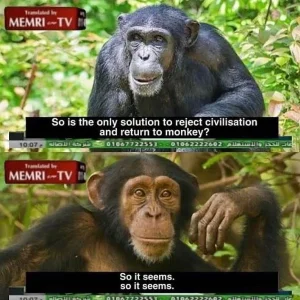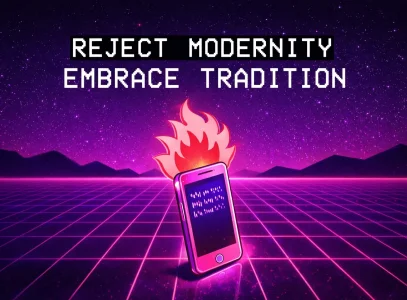
It's ironic because this image is made with AI.
Alright, this is going to be weird to write this on a forum called "NerdZone" that's about tech for the better part, but I don't really like tech. Modern tech, that is. Talking 2010s and onward here.
Most people are quite fond of today's tech. In many ways it arguably makes life convenient. Need to order tickets? Need to do your taxes? Need to buy practically anything you can think of and have it delivered the next morning? Just whip out the ol' smartphone and it's done within minutes. Pretty cool, right? But there is a dark side to this.
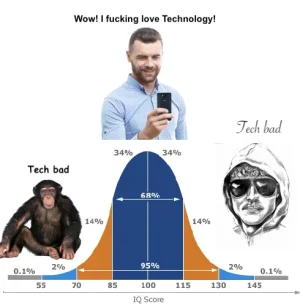
Me on the left, by the way.
Let's flashback to, say, the 80s, or the 90s. Mobile phones existed, but they were expensive, it was still a fairly niche market. Even in the first world, by far most people did not have them yet so folks usually had landlines. The same with the internet applied: it was there, but you had to be a successful Wall Street type of businessman or some kind of early adopter giganerd (hello, Retro!
 ) to own a capable PC and a dialup connection that ate currency by the minute. Now let me show you a photo here: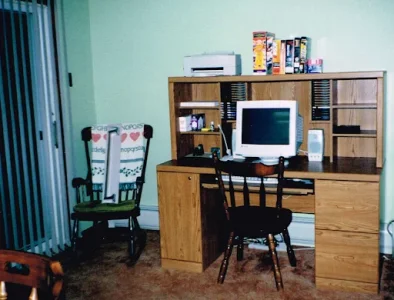
Rate my setup.
There is a good chance that this invokes some feeling of nostalgia within you. Is it the woodgrain of the cabinet? Is it the CRT monitor? Maybe. But that's surface level stuff. Wanna know the deeper meaning behind that melancholy? Both the internet and, in most households, the phone had a specific permanent location. It didn't go anywhere. It wasn't on your person 24/7 wherever you went. You had to go to that one corner in the house if you wanted to use the internet or telecommunications. When you left this particular spot, you left the internet. The internet, and the telephone, was a place.
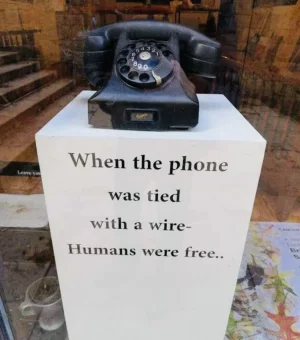
Imagine time traveling back to the 70s and explaining to people that this would fit in your pocket and how much time we would spend staring at it.
Fast-forward to 2026: the internet is everywhere. You cannot escape it. The internet, now carried almost entirely through smartphones, has become a constant, invasive presence, with algorithms humming in the background of our lives at all times, watching, nudging, predicting, and shaping our behavior. Modern life increasingly demands participation in specific apps just to function, whether for work, navigation, payments, social connection, or even basic access to services, leaving little room to opt out without real consequences.
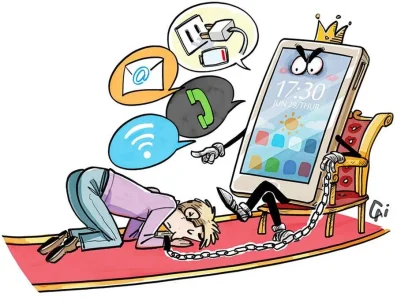
When was the last time you went without a smartphone for 24 hours?
This permanence means there is no true off-switch, no natural boundary between being online and being alone, and no real pause from the pressures of visibility, responsiveness, and optimization. In contrast and as said: when the internet and telephones were tethered to landlines, they occupied fixed places in the world rather than living in our pockets, allowing people to step away physically and mentally, to be unreachable, and to experience stretches of time that were genuinely free from digital demands, freedoms that now feel increasingly rare. That's my biggest problem with today's level of tech: you cannot escape from it. Not entirely, at least.
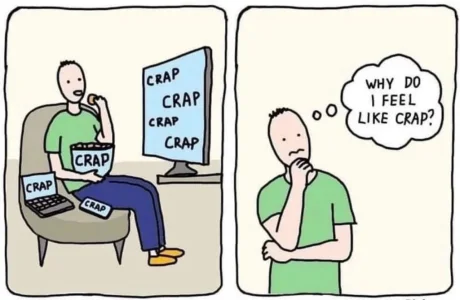
Lay down the screens (and the Lay's) and it will set you free.
Another issue I have with today's internet is that while the quantity has risen, the quality of it is spiraling downwards significantly. Social media, for example, designed to appeal to the broadest possible audience, has steadily eroded the quality of the internet by rewarding ragebait, engagement farming, and the rapid spread of deliberate misinformation, all of which thrive on emotional reaction rather than thoughtfulness or truth. This decline is not confined to individual users or fringe platforms; mainstream media has eagerly adopted the same tactics, leaning on clickbait headlines and constant sensationalism to compete for attention in the same algorithm-driven ecosystem.

The dumber the content, the more likely it will go viral. And content creators know this.
In the early days of the internet, access was largely limited to technically inclined and intellectually curious users, but the rise of the smartphone lowered the barrier so dramatically that even the least well-informed and most casually engaged users can now participate without friction, shifting the balance of demand toward simpler, louder, and less reflective content. Algorithms, built to maximize engagement above all else, naturally amplify this material, pushing nuanced or intellectually demanding voices further to the margins.

What a coincidence.
At the same time, these algorithms are used extensively to monitor users and serve hyper-personalized advertising in ways that feel increasingly aggressive and invasive. Where advertising once relatively subtly existed primarily to "keep the lights on" for a service, it has now metastasized into full-screen interruptions, auto-playing distractions, and multi-step dismissals, making it clear that we are being subjected not to a reasonable necessity, but to the maximum level of annoyance that remains legally permissible.

How many screens and internet capable devices do you own?
Taken together, these trends make it hard not to think of Idiocracy as less a satire and more an uncomfortably accurate forecast. What was once an exaggerated joke about a future dulled by convenience, anti-intellectualism, and corporate overreach now feels eerily familiar in an internet shaped by smartphones, algorithms, and platforms that reward the loudest, angriest, and simplest impulses. Social media's race to the bottom, mainstream media's embrace of clickbait, and the algorithmic amplification of low-effort outrage mirror the film's world, where complexity is discarded in favor of instant gratification and spectacle.

Another movie with striking resemblances is The Fifth Element. In the story millions of people would tune in to a random-activity, all-day live broadcast hosted by an irrepressibly bombastic fashion plate, just riffing on things he sees. And now, millions of people watch streamers do just that.
The lowering of the barrier to participation has, without corresponding cultural or educational safeguards, produced an environment where shallow engagement dominates and thoughtfulness struggles to survive. Even Idiocracy's omnipresent advertising feels prophetic: what was played for absurd laughs in Idiocracy now exists in the form of full-screen ads, relentless personalization, and invasive tracking that follows us everywhere, optimized to extract maximum attention rather than offer value. Quiet, cumulative result of systems designed to prioritize engagement, profit, and convenience, slowly nudging reality toward parody until the parody starts to look like a documentary.
View attachment 1000025605.mp4
Are you lost in the world like me?
All of this should give us pause and force us to reckon with how much screen time the average person in the modern, first-world reality now accumulates. Hours upon hours each day poured into glowing rectangles that rarely leave us wiser, calmer, or more fulfilled. So much of this time is not chosen deliberately but absorbed passively, siphoned away by feeds engineered to keep us scrolling rather than living. Stepping back into the real world (a.k.a. IRL) more often would not be a loss but a recovery: of attention, of physical presence, of the quiet mental space that allows thoughts to deepen instead of fragment.
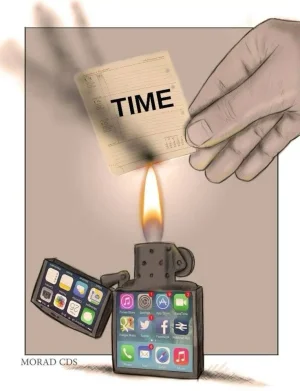
How many days/months/years of your life have you been burning away?
During my many recent long walks I have given this considerable thought: laying down our smartphones, even occasionally, opens room for things that actually nourish us: walking in nature, moving our bodies, feeling weather on our skin, having conversations that aren’t mediated by metrics or notifications. These are not nostalgic luxuries: they are basic human needs. If we continue to outsource our lives to screens, we risk forgetting that the world was never meant to be consumed primarily through glass. At some point, we have to choose to unplug, to step out of the Matrix so to speak, and remember how to live a more natural, embodied life: one where attention belongs to us again, not to the algorithm, not through screens.
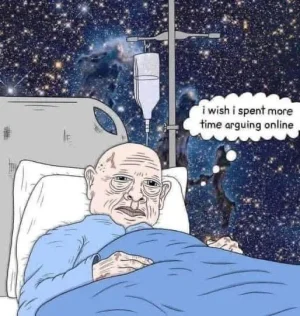
Literally no one has ever said this on their deathbeds.
On a sidenote: Today marks that it is exactly 1 year ago that I joined NerdZone. And this is my 1000th post. Will I still be here for Year 2? Sure. Will my post count be 2000 by that time? We'll see.
Edit:

Well, shit.
Last edited:

 Imagine if one could remember everything they did, it would be mindblowing remembering all the repetition.